Lemon Juice
Traditionally Used For
- Anemia
- Arthritis
- Blood
- Constipation
- Gout
- Indigestion
- Scurvy
- Skin Problems
- Toxin Elimination
- Weight Loss
A Good Source Of
- Bioflavonoids
- Vitamin C
- Potassium
Freshness Test
A lemon that has some green on it means it is not fully fresh and has a higher acidity content. Look for lemons with smooth skins as they generally have more juice.
Important
Citrus fruits, when taken in excess, are known to leech calcium from the body. All citrus fruits add citric acid to the body and so it's a good idea to get some exercise after having a citrus fruit drink.
General
Some people peel the skin and some don't. If you peel the skin, make sure you leave some of the white membrane on the fruit. The white membrane contains the bioflavonoids. The bioflavonoids help the body absorb and use Vitamin C.
I personally don't peel the skin and I like to combine ¼ to ½ lemon, depending on the size, with a few apples.
Drink immediately after juicing to ensure you get all of the Vitamin C.
Chinese Herbal Information
Properties:
Energy: cool
5 Elements: wood
5 Flavors: sour
General Information:
Nothing to report.
Cautions & Suggestions:
Chinese herbalists suggest that lemons should be avoided by those that suffer from gastric or duodenal ulcers along with excessive gastric acid.
The lemon seeds are said to help stimulate energy and relieve pain.
Chinese herbalists have long known that lemon juice (lemonade) is beneficial in helping cool the body on hot days. Thus lemonade, as a traditional summer drink, is in fact quite beneficial. Unfortunately, most people buy commercially prepared lemonade rather than making it themselves.
Benefits:
- Coughs With Mucous Discharge
- Cooling The Body On Hot Days
- Diabetes
- Indigestion
- Pharyngolaryngitis
Herbal and Homeopathic Remedies That You Might Like
I have personally been using herbal and homeopathic remedies with great success since 1992. So like me, you might find that in addition to juicing, the following herbal and/or homeopathic remedies may be beneficial in helping you achieve greater and better health.
→ Don't see the right remedy for you? View a wide selection of more herbal and homeopathic remedies for various health concerns.
- InflammaGo
Homeopathic remedy relieves joint and muscle pain, inflammation and stiffness associated with arthritis.
- YouthShield Naturals Hyaluronic Defense Moisturizer with Brown Algae
Age-defying daily moisturizer infuses skin with high potency moisturization for complete hydration and a flawless, youthful complexion.
- DetoxPlus
Promotes system detoxification to eliminate harmful wastes and toxins.
- Bug Defense ComboPack for Pets
Natural Bug Defense, a safe, DEET-free insect repellent for pets and Herbal supplement Parasite Dr. for digestive detoxification and functioning.
- Liver Dr.
Supports healthy liver functioning.
Picture of Lemons
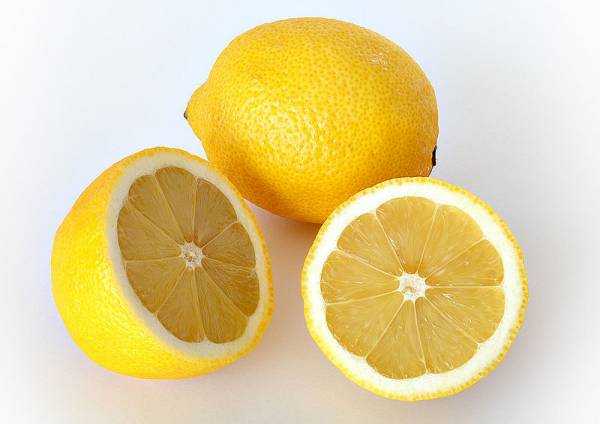
Photo by André Karwath.
Sponsored Links
Lemon — Nutritional Analysis
- Nutrient
- Units
- Value / 100 g
- Proximates
- Water
- g
- 87.40
- Energy
- kcal
- 20
- Energy
- kj
- 84
- Protein
- g
- 1.20
- Total lipid (fat)
- g
- 0.30
- Ash
- g
- 0.40
- Carbohydrate, by difference
- g
- 10.70
- Fiber, total dietary
- g
- 4.7
- Minerals
- Calcium, Ca
- mg
- 61
- Iron, Fe
- mg
- 0.70
- Magnesium, Mg
- mg
- 12
- Phosphorus, P
- mg
- 15
- Potassium, K
- mg
- 145
- Sodium, Na
- mg
- 3
- Zinc, Zn
- mg
- 0.10
- Copper, Cu
- mg
- 0.260
- Vitamins
- Vitamin C, total ascorbic acid
- mg
- 77.0
- Thiamin
- mg
- 0.050
- Riboflavin
- mg
- 0.040
- Niacin
- mg
- 0.200
- Pantothenic acid
- mg
- 0.232
- Vitamin B-6
- mg
- 0.109
- Vitamin B-12
- mcg
- 0.00
- Vitamin A, IU
- IU
- 30
- Retinol
- mcg
- 0
- Vitamin A, RAE
- mcg_RAE
- 2
Have you been wanting to do hatha yoga (stretching) but have found it either too difficult or you are not that flexible? If yes, and even if no, watch Jesse do some pure hatha yoga routines.
Unlike flow yoga
, each pose in pure or traditional hatha yoga is held for a few minutes. While holding the pose, you focus the mind on the stretch. When you focus the mind, that's when you find silence.
Jesse is not flexible — never has been and probably never will be flexible like others. But it doesn't matter. In pure hatha yoga, how flexible you are makes no difference. It's all about loving the pose and focussing the mind on the stretch.
If you want to learn pure hatha yoga, now you can by following Jesse on a series of hatha yoga routines.
Sponsored Links
Random Questions That Have Been Asked:
- Does pickling remove the benefits?
- What are good juicing combinations? What juicing combinations should be avoided?
- Do you have any tips for Cystic Fibrosis, asthma and respiratory illnesses?
- Should some vegetables be cooked before juicing?
- How Can I Store Vegetables?
- What is the healthiest juice I can make?
- Juicing strategy for overall health and wellness.
- Hypolycemia — blurred vision and tiredness while juicing.
- What can help with my hemorrhoids, fissures and inflammation?
- How Much Nutrition Is In Pulp?